Home

Soul Dictionary

Saudade

A deep emotional state of nostalgic longing for something or someone absent.

Fadista

The soul who sings the Fado; more than a singer, a storyteller of fate.

Guitarrada

An instrumental piece where the guitars take center stage without vocals.

Castiço

Authentic, traditional, or 'pure'—referring to the oldest roots of Fado.

Destino

Fate. The inescapable path that Fado often laments or accepts.

Noite

The night. The only true setting where Fado can be properly felt.

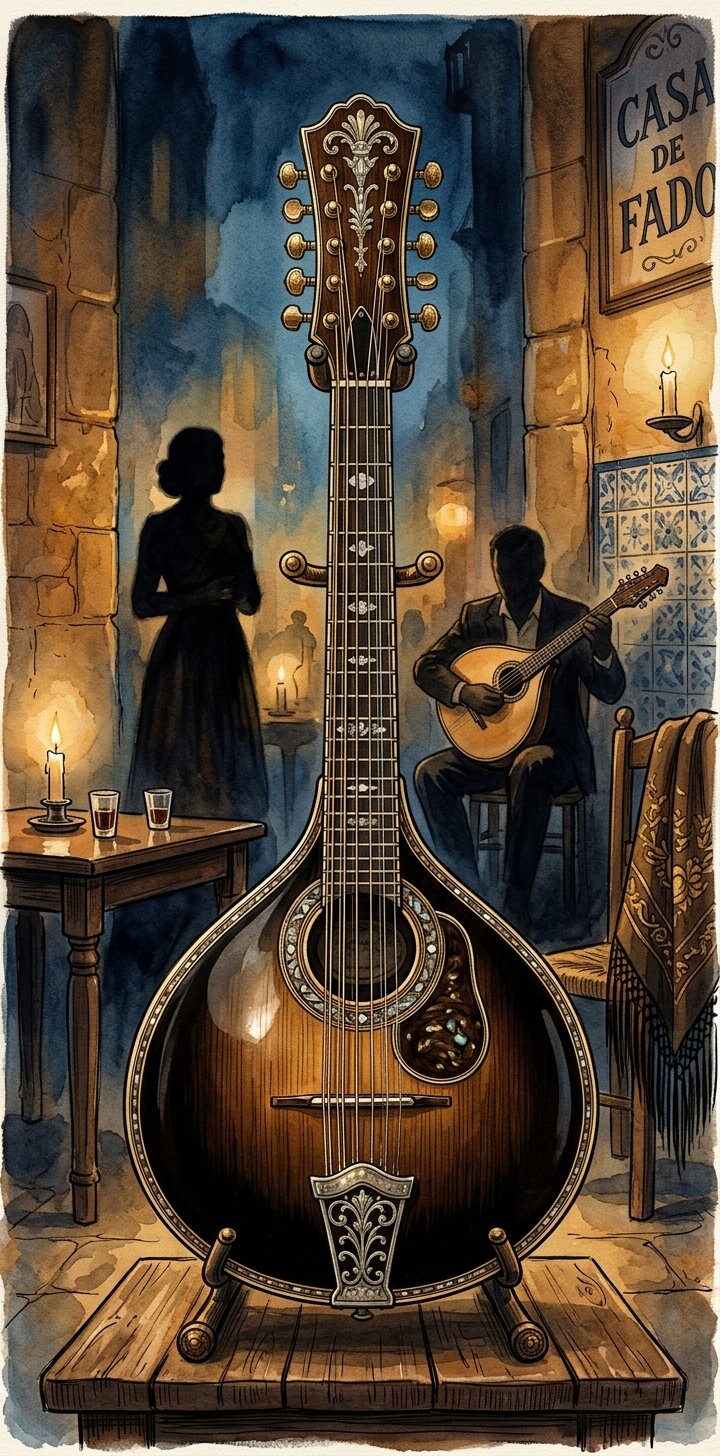
The Portuguese Guitar

  • The Volute (Caracol) The scroll-shaped headstock, a mark of the Lisbon style.
  • Preston Tuners The fan-shaped tuning mechanism unique to this instrument.
  • The 12 Strings Arranged in 6 courses, creating its rich resonance.
Fado Guitar

The Protocols of Silence.

I

The Sovereignty of Silence

Silence is the canvas upon which Fado is painted. When the lights dim, all whispers must vanish.

Curator's Note

"The 'fadista' breathes through the silence you provide."

II

The Temporal Flow

Fado follows its own clock. Expect 20-minute performances followed by generous intervals for wine and conversation.

Curator's Note

"Never rush a Fado night; it is a marathon of emotion, not a sprint."

III

Culinary Deference

Service and dining are suspended during the singing. The clink of a fork is a discord to the guitar's vibration.

Curator's Note

"Finish your bite before the first chord is struck."

IV

The Shadow of Saudade

Saudade is the presence of an absence. It is an untranslatable longing that defines the Portuguese soul.

Curator's Note

"You don't need to understand the words to feel the weight of the loss."

V

Visual Restraint

Bright screens and flash photography destroy the intimate chiaroscuro of the Fado house.

Curator's Note

"A phone screen is a spotlight that breaks the spell for everyone around you."

VI

The Instrumental Soul

The Portuguese Guitar (12 strings) and the Viola de Fado are not mere backups; they are the singer's heartbeat.

Curator's Note

"Listen to the 'dialogue' between the guitarists during the instrumental openings."

VII

The Dress Code of Respect

While formal wear isn't always mandatory, the atmosphere calls for 'smart casual' as a sign of respect for the art.

Curator's Note

"Avoid beachwear; Fado is a ritual, dress for the occasion."

VIII

The 'Ah Fadista!' Ritual

This traditional exclamation is the only appropriate interruption, shouted only when the song ends with great soul.

Curator's Note

"It is the equivalent of 'Amen' in a secular temple."

IX

The Artist's Entrance

Fadistas often walk through the crowd to reach the stage. Give them space; they are entering a state of trance.

Curator's Note

"Maintain physical distance to allow the artist to focus on their emotional transition."

X

Coimbra vs Lisbon

Lisbon is the Fado of the taverns and the heart. Coimbra is the Fado of the university and the serenades.

Curator's Note

"In Coimbra, men wear black capes; in Lisbon, the shawl belongs to the woman."

XI

The Lighting Protocol

Red or very dim lights mean the music is imminent. This is your cue to find your seat and fall silent.

Curator's Note

"Shadows are as important as the notes in a Fado house."

XII

The Fado 'Vadio' Spirit

Amateur Fado (Vadio) is not about quality, but about the raw necessity to sing. It is spontaneous and unpolished.

Curator's Note

"The most authentic moments often come from the most unexpected voices."

XIII

The Gratuity Logic

In many traditional houses, the artists are supported by the house and your consumption. Tipping is appreciated but not mandatory.

Curator's Note

"A sincere 'Obrigado' and deep attention are the best tips you can give."

XIV

The Shadow's Presence

Fado thrives in the dark. The lighting is designed to hide the audience and spotlight only the emotion.

Curator's Note

"Let your eyes adjust to the dimness; the atmosphere is part of the story."

XV

The Guitarist’s Prelude

Before the voice, there is the 'Guarratada'. These instrumental pieces are a showcase of technical mastery.

Curator's Note

"Silence is just as mandatory during the instrumental solos as it is for the lyrics."

XVI

The Unwritten Seating Rule

In traditional houses, you might share a table with strangers. This is a century-old tradition of communal emotion.

Curator's Note

"Fado is a shared catharsis; strangers at your table are witnesses to the same soul."

XVII

The Power of the 'Xaile'

The black shawl is a symbol of mourning and dignity. It is an extension of the fadista's body.

Curator's Note

"Watch how she wraps the shawl; it signals the emotional intensity of the song."

XVIII

Requesting a Song

Locals rarely ask for hits. Fado is about what the artist feels like giving at that specific moment.

Curator's Note

"The best Fado is never requested; it is surrendered by the artist to the room."

XIX

The Mid-Song Entrance

If you arrive and hear music, wait outside. Never enter a room while a 'fado' is being performed.

Curator's Note

"The draft and the light from the door are seen as a violation of the 'trance'."

XX

The Silence After the Song

There is often a brief, heavy silence right after a fado ends. This is the 'after-taste' of the emotion.

Curator's Note

"Do not rush to clap; let the last vibration of the guitar string fade completely."

XXI

The Neighborhood nuances

Each district has a different 'accent'. Alfama is traditional; Mouraria is bohemian.

Curator's Note

"The neighborhood mentioned is often the 'character' the fadista portrays."

XXII

Alcohol as a Catalyst

Wine is the traditional companion, but intoxication that leads to noise is the ultimate insult.

Curator's Note

"Drink to feel the music, not to drown it out."

XXIII

The Respect for the Elders

Older fadistas are revered as living libraries. Their weathered voices carry the true 'estilo'.

Curator's Note

"Listen closely to the veterans; they carry the secrets of the past."

XXIV

The Singer’s Eyes

Fadistas often sing with their eyes closed. They are searching for the internal 'duende' of the song.

Curator's Note

"They are inviting you into their private world of memories."

XXV

The Interval Gastronomy

Fado dinner is meant to be heavy on soul. Traditional dishes like Caldo Verde are designed to warm the spirit.

Curator's Note

"Eat during the intervals to respect both the chef and the singer."

XXVI

The Unspoken Encore

If the room is silent and attentive, the artists may return for an unscheduled 'despedida'.

Curator's Note

"Consistency in your silence is what earns you an extra song."

XXVII

The Age of the Repertoire

Some songs are over 150 years old. They are part of a collective oral history passed down through generations.

Curator's Note

"You are listening to a living archive of Lisbon’s history."

XXVIII

The Final 'Obrigado'

A simple nod or a quiet 'Obrigado' to the guitarists is as valued as a standing ovation.

Curator's Note

"Fado is about intimacy; keep your appreciation personal and sincere."